
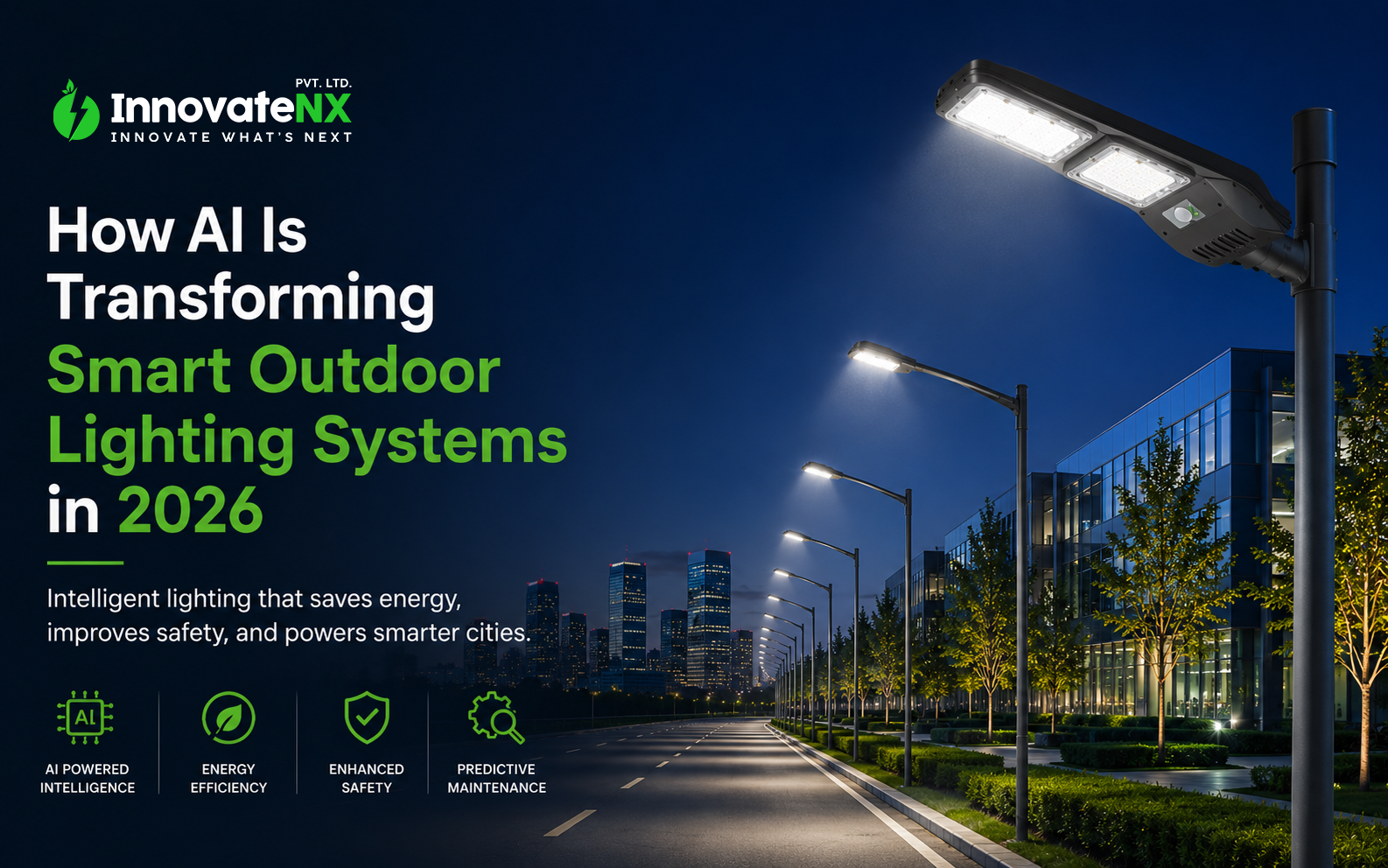
Smarter automation, lower energy costs, and intelligent lighting are changing how cities, businesses, and industries illuminate outdoor spaces.
Outdoor lighting has evolved far beyond simply turning lights on after sunset. In 2026, artificial intelligence (AI) is making outdoor lighting smarter, safer, and more efficient than ever before. AI-powered lighting systems can analyze traffic, weather, pedestrian movement, and energy consumption in real time. As a result, they deliver better performance while reducing electricity costs.
Governments, industries, commercial campuses, warehouses, highways, and residential communities are adopting AI-enabled LED lighting to improve sustainability and operational efficiency. Instead of relying on fixed schedules, modern lighting systems automatically respond to changing conditions.
InnovateNX is helping businesses embrace this transformation by providing advanced LED lighting solutions that are reliable, energy-efficient, and ready for smart infrastructure projects.
Why AI Is Becoming Essential for Outdoor Lighting
Traditional outdoor lighting operates on timers or manual controls. These systems waste energy because lights often remain at full brightness, even when roads or parking areas are empty.
AI changes this completely.
It collects data from sensors and connected devices. Then, it analyzes that information instantly. Finally, it adjusts lighting levels based on real-world conditions.
This intelligent process reduces electricity use without compromising safety or visibility.
The result is better lighting with lower operating costs.
How AI-Powered Outdoor Lighting Works
AI lighting systems combine several advanced technologies into one connected platform.
These systems typically include:
- Motion sensors
- Ambient light sensors
- Weather monitoring
- Traffic detection
- Wireless communication
- Cloud-based analytics
- Smart LED drivers
- Predictive maintenance software
Together, these components create an intelligent lighting network that continuously learns and improves performance.
Instead of treating every streetlight equally, AI makes individual decisions for every lighting fixture.
Intelligent Brightness Control
One of the biggest advantages of AI is adaptive brightness.
For example, a quiet residential road does not need maximum illumination throughout the night.
When AI detects no vehicles or pedestrians, it reduces brightness to save energy.
As soon as movement is detected, the lights automatically return to full illumination within seconds.
This simple adjustment provides several benefits:
- Lower electricity consumption
- Longer LED lifespan
- Reduced maintenance costs
- Improved environmental performance
InnovateNX LED lighting solutions support efficient illumination that helps organizations achieve significant energy savings.
Better Energy Management
Energy efficiency remains the primary reason organizations invest in AI-powered outdoor lighting.
Artificial intelligence continuously monitors:
- Power consumption
- Operating hours
- Seasonal usage
- Peak demand
- Weather conditions
Using this information, the system optimizes lighting schedules automatically.
Instead of wasting electricity during low-demand periods, AI ensures that every watt is used effectively.
For municipalities managing thousands of streetlights, these savings can significantly reduce annual operating budgets.
Predictive Maintenance Reduces Downtime
Traditional maintenance follows fixed schedules.
Unfortunately, many lights are serviced even when they are working perfectly.
At the same time, unexpected failures often remain unnoticed for days.
AI solves both problems.
Smart systems monitor:
- Temperature
- Voltage
- Driver performance
- LED health
- Power fluctuations
When the software detects unusual behavior, it predicts possible failures before they happen.
Maintenance teams receive automatic alerts.
They can replace components before complete failure occurs.
This reduces downtime, lowers repair costs, and improves public safety.
Smarter Cities Need Smarter Lighting
Smart cities depend on connected infrastructure.
Lighting is becoming one of the most important parts of that ecosystem.
AI-enabled street lighting can communicate with:
- Traffic management systems
- Emergency services
- Environmental monitoring stations
- Public Wi-Fi networks
- Security cameras
- Parking management systems
This connectivity creates a more responsive urban environment.
For example, emergency vehicles can trigger brighter lighting along their routes.
Similarly, heavy traffic can automatically increase illumination at busy intersections.
These intelligent responses improve both safety and efficiency.
Improved Safety for Everyone
Lighting plays a critical role in public safety.
AI enhances security by ensuring that lighting matches real-world activity.
When motion is detected in parks, pathways, industrial facilities, or parking lots, illumination immediately increases.
Better visibility helps:
- Reduce accidents
- Improve pedestrian safety
- Support security surveillance
- Discourage criminal activity
- Improve driver confidence
Businesses also benefit from better nighttime visibility around warehouses, factories, logistics centers, and commercial buildings.
InnovateNX understands that dependable lighting is essential for creating safer environments across every industry.
Sustainability Through AI
Environmental responsibility continues to influence infrastructure investments.
AI-powered lighting supports sustainability by reducing unnecessary energy consumption.
Lower electricity usage means fewer carbon emissions.
Additionally, longer LED life reduces electronic waste.
Many organizations are combining AI with:
- Solar street lighting
- Renewable energy systems
- Battery storage
- Smart energy grids
Together, these technologies create environmentally responsible lighting solutions that support long-term sustainability goals.
AI Analytics Help Decision Makers
Modern lighting systems generate valuable operational data.
AI transforms this information into practical insights.
Facility managers can monitor:
- Energy reports
- Lighting performance
- Fault history
- Maintenance trends
- Usage patterns
- Cost savings
These analytics help organizations make smarter investment decisions.
Instead of relying on assumptions, managers use real performance data to improve infrastructure planning.
Industries Benefiting from AI Outdoor Lighting
AI lighting technology is expanding across multiple sectors.
Popular applications include:
- Smart cities
- Highways
- Residential communities
- Airports
- Railway stations
- Industrial facilities
- Manufacturing plants
- Warehouses
- Educational campuses
- Hospitals
- Commercial complexes
- Sports facilities
- Parking areas
- Public parks
- Logistics hubs
Each environment benefits from improved efficiency, intelligent automation, and reduced operating expenses.
The Future of Outdoor Lighting
The future of outdoor lighting will become even more intelligent.
Over the next few years, AI systems will integrate with digital twins, autonomous vehicles, advanced weather forecasting, and city-wide IoT platforms.
Lighting will no longer operate independently.
Instead, it will become part of a connected infrastructure that continuously improves urban living.
InnovateNX continues to support this transition by delivering durable LED lighting solutions designed for modern infrastructure, energy efficiency, and long-term reliability.
Conclusion
Artificial intelligence is redefining outdoor lighting in 2026. Smart lighting systems now deliver far more than illumination. They optimize energy use, improve public safety, reduce maintenance costs, and provide valuable operational insights.
Organizations that invest in AI-powered LED lighting gain long-term financial and environmental benefits while preparing for the future of smart infrastructure.
Whether for municipalities, industries, commercial facilities, or residential developments, intelligent outdoor lighting is becoming the new standard. As AI technology continues to evolve, businesses that adopt smarter lighting today will be better positioned for tomorrow’s connected world.
📅 Last updated:
